

A digital marketing report isn't just a collection of numbers; it’s a strategic document that translates complex performance data into a clear story about your marketing wins, challenges, and opportunities. For B2B marketers and Fractional CMOs, a great report is the key to proving value, guiding smart decisions, and aligning every marketing effort with core business objectives.
Beyond Data Dumps: A New Approach to Reporting
Let's be honest. Most marketing reports are a chore to create and even worse to read.
They often end up as dense spreadsheets or slides filled with vanity metrics that leave leadership wondering, "So what?" The real goal isn't just to present data; it's to build a narrative that proves your value and drives the business forward. In fact, companies that leverage data-driven insights are 23 times more likely to acquire customers.
This guide provides a practical framework for building a digital marketing report that your team and leadership will actually want to read.

Shifting From Reporting to Storytelling
An effective report moves beyond simply listing what happened. It explains why it happened and what should happen next. This means connecting every metric to a larger business goal, turning a backward-glancing document into a forward-looking strategic tool.
For instance, one of our B2B tech clients used to present lengthy reports detailing website traffic and social media follower growth. While the numbers were positive, the C-suite couldn't see the connection to revenue. We helped them restructure their report to focus on metrics like Marketing Qualified Leads (MQLs) from organic search and the conversion rate from their content downloads.
This simple shift in focus transformed their reporting meetings. Instead of questioning marketing spend, the leadership team began asking how they could further support the campaigns that were clearly generating pipeline.
This new approach allowed them to secure a 40% budget increase the following quarter. It's a powerful example of how focusing on business impact creates alignment and fuels growth.
Before we dive deeper, let's establish the core pillars of a report that truly makes an impact. This table offers a quick overview of the essential elements your report needs to effectively communicate performance and strategy.
Key Components of a High-Impact Marketing Report
| Component | Purpose | Example Metric |
|---|---|---|
| Executive Summary | Provides a high-level overview of key wins and strategic takeaways for leadership. | "Achieved 25% increase in MQLs, exceeding Q2 goal by 10%." |
| KPI Dashboard | Offers a visual snapshot of performance against targets for quick assessment. | Lead Conversion Rate (Target vs. Actual) |
| Channel-Specific Deep Dive | Details the performance and insights from each marketing channel (SEO, PPC, etc.). | Cost Per Lead (CPL) for LinkedIn Ads |
| Strategic Analysis | Explains the 'why' behind the data and connects performance to business goals. | "Lower organic traffic linked to recent algorithm update; recommend content refresh." |
| Forward-Looking Recommendations | Outlines actionable next steps and proposes strategic adjustments for the next period. | "Reallocate 15% of PPC budget to high-performing TOFU campaigns." |
Each of these components plays a critical role in transforming your report from a data dump into a strategic asset.
Tackling Common B2B Reporting Challenges
Fractional CMOs and in-house marketers face a unique set of hurdles when building their reports. We’ll address these common pain points with practical, actionable solutions.
- Demonstrating Clear ROI: We'll show you how to connect your marketing activities directly to revenue, pipeline, and customer acquisition costs.
- Unifying Disparate Data: Learn how to consolidate information from multiple platforms—like Google Analytics, your CRM, and social media channels—into a single, coherent story.
- Saving Time and Resources: We'll explore templates and automation strategies that cut down on manual data-pulling, freeing you up for more critical analysis.
Ultimately, a well-crafted digital marketing report is one of your most powerful assets. It builds trust, secures budget, and ensures your marketing strategy is always moving in the right direction. Ready to build a report that gets this kind of attention? Contact us to get started.
First, Define Who Is Reading Your Report
Before you pull a single metric or open a dashboard, stop. The most critical first step is figuring out who, exactly, is going to read your digital marketing report. A report is only as valuable as the action it inspires, and different people need different information to make decisions.
Failing to tailor your report to its audience is like giving a complex engine schematic to someone who just wants to know how fast the car can go. The language, depth, and focus have to change. Nearly 40% of agencies credit proactive communication and transparency as the number one driver of client retention, and that starts with speaking your stakeholder's language.
Your CEO, for instance, operates at 30,000 feet. They care about high-level business outcomes and the return on marketing investment. Flood their inbox with granular data on ad-level click-through rates, and their eyes will glaze over. They need to see the straight line connecting marketing spend to revenue growth.
Tailoring Content for Different Stakeholders
To create a report that actually gets read and acted upon, you have to map your metrics to each stakeholder's core concerns. This way, every piece of data you present is answering an implicit question they have about the business.
-
For the C-Suite (CEO, CFO): Their world revolves around financial impact and strategic growth. Your report for them should be a clean, one-page executive summary. Stick to bottom-line metrics like Customer Acquisition Cost (CAC), Marketing-Sourced Revenue, and Return on Ad Spend (ROAS). They need to see, at a glance, how marketing is fuelling the pipeline and contributing to overall business health.
-
For the Marketing Manager or Fractional CMO: This person needs a more balanced view, acting as the bridge between high-level strategy and in-channel execution. Their report should include channel performance summaries, lead quality metrics like Marketing Qualified Leads (MQLs), and conversion rates through the funnel. This gives them the intel needed to assess which channels are working and where to shift resources.
-
For the Channel Specialist (PPC, SEO, or Content Marketer): This is where you get into the weeds. Your PPC specialist needs to see Cost Per Click (CPC), ad group performance, and quality scores. Your SEO specialist will want to analyze organic keyword rankings, backlink acquisition, and technical site health. These reports are purely tactical, designed to inform day-to-day optimizations.
A B2B SaaS Company in Action
Think about a B2B SaaS company right here in Kitchener-Waterloo. They used to send the same dense, 20-page report to everyone from the board of directors to their content team. The result? Nobody read it, and the marketing team was constantly fighting to prove its value.
So, they completely overhauled their approach and started creating audience-specific reports.
The board received a one-page summary highlighting a 25% quarter-over-quarter increase in demo requests from organic search and a 15% reduction in CAC. That single page immediately proved clear ROI and secured continued investment in their SEO and content strategy.
Meanwhile, the marketing team used a detailed, multi-tab dashboard in Looker Studio. It broke down performance by blog post, keyword cluster, and social media campaign. This dashboard empowered them to see that while LinkedIn drove less traffic than X (formerly Twitter), its leads had a 50% higher conversion rate to MQL. That one insight led them to reallocate their social media budget, boosting lead quality without increasing spend.
This success story hammers home a fundamental truth: a great digital marketing report delivers insights, not just data. By focusing on what your audience needs to know, you transform your report from a chore into a powerful tool for communication and strategic alignment.
Need help creating reports that speak directly to your stakeholders? Contact us, and we’ll build a reporting framework that proves your marketing's value and drives real business decisions.
Choosing KPIs That Actually Matter to the Business
Once you know who’s reading your report, it’s time to pick the metrics that tell the real story. It's far too easy to stuff a report with vanity metrics—social media likes, website visitors, impressions—that look impressive on a slide but don't answer the one question the C-suite really cares about: "How is marketing making us money?"
To prove your value, you have to connect every marketing dollar to a tangible business outcome. A lead. A qualified opportunity. A sale. A great report doesn't just show activity; it demonstrates results. In fact, marketers who focus on ROI are 1.6 times more likely to receive higher budgets.
Moving Beyond Clicks and Impressions
For B2B companies, the most meaningful KPIs almost always track movement through the sales funnel. This means shifting focus from broad, top-of-funnel noise to indicators that signal real buyer intent.
-
For SEO: Forget reporting on overall organic traffic. What truly matters are organic conversions—demo requests, contact form submissions, and trial sign-ups. You should also track rankings for high-intent keywords, the phrases your ideal customers type when they're ready to buy. A spike in traffic is nice, but a spike in traffic that converts is what protects your budget.
-
For PPC: Clicks and impressions are table stakes. Your primary metrics here should be Return On Ad Spend (ROAS) and Lead Quality Score. These KPIs tell you if your ads aren't just being seen, but if they're attracting the right prospects and turning a profit.
-
For Content Marketing: Blog views are a starting point, not the finish line. The real metrics to watch are things like gated content downloads (think whitepapers or ebooks), content-assisted conversions, and the number of MQLs that originated from a specific article. This is how you prove your content is a hard-working asset, not just a library of articles.
Think about it this way: different roles in the company need different data to make decisions. A CEO is focused on high-level business impact, while a channel specialist needs granular data to optimize campaigns.
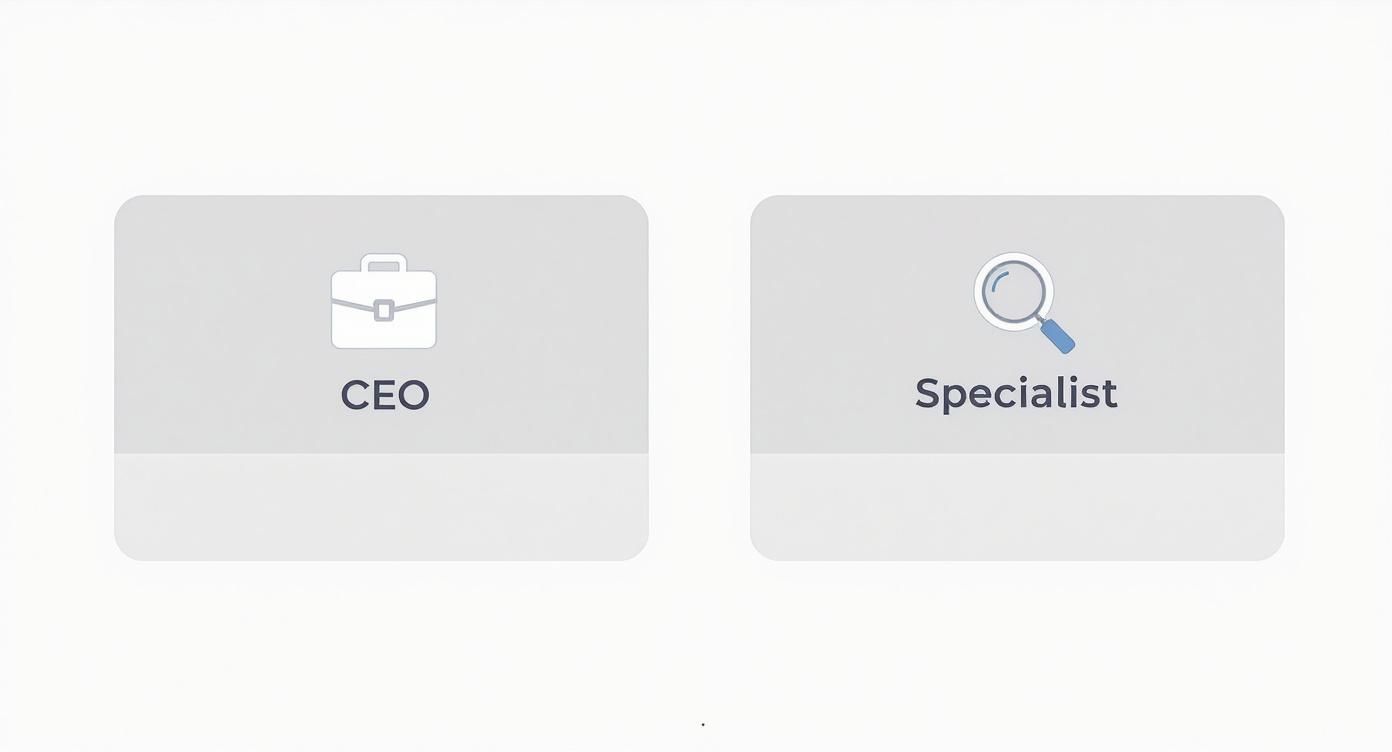
This distinction is crucial. Your report needs to serve both audiences, presenting top-line business metrics to leadership while giving your team the detailed insights they need to execute.
The Power of Revenue-Centric Metrics
Let me give you a real-world example. A B2B SaaS client of ours was pouring resources into their blog, churning out several high-quality articles a month. Their marketing report proudly showcased a 300% increase in blog traffic over six months. The problem? The CEO didn't care, because sales hadn't budged.
So, the team pivoted. They stopped making traffic the hero metric and started tracking one thing above all else: demo requests originating from organic search.
By shifting their focus to this bottom-of-funnel KPI, they could finally draw a straight line from their content to real business outcomes. This change revealed that just two of their blog posts were driving 80% of their organic leads.
That insight was a game-changer. They immediately doubled down on creating content around those high-converting topics and went back to optimize older posts with stronger calls-to-action. The result was a 150% increase in qualified leads in just one quarter, finally proving the massive value of their content strategy to the board. It’s a powerful lesson: what you measure is what you manage.
Essential B2B KPIs by Digital Marketing Channel
To help you get started, I’ve put together a quick-reference table that breaks down the primary and secondary KPIs you should be tracking for the most common B2B marketing channels.
| Channel | Primary KPI | Secondary KPI |
|---|---|---|
| SEO | Organic Conversions | Keyword Rankings (High-Intent) |
| PPC | Return On Ad Spend (ROAS) | Cost Per Lead (CPL) |
| Content Marketing | Content-Assisted Conversions | Gated Content Downloads |
| Email Marketing | Lead Nurturing Conversion Rate | Click-Through Rate (CTR) |
| Social Media | Leads from Social | Engagement Rate |
Use this as a starting point to ensure your reports are packed with metrics that truly reflect business growth and channel performance.
Connecting Your KPIs to the Bottom Line
Another critical metric that bridges the gap between marketing spend and revenue is Customer Acquisition Cost (CAC). Understanding how much it costs to acquire a new customer through each channel is fundamental to proving ROI. When you can show leadership that your SEO and content efforts are bringing in customers for a fraction of the cost of your paid channels, you build an undeniable business case for your strategy.
If you’re not already tracking it, check out our guide on how to calculate customer acquisition cost to get this vital metric into your reports.
Ultimately, choosing the right KPIs transforms your digital marketing report from a simple activity summary into a strategic tool. It’s what justifies budgets, guides decisions, and proves marketing’s direct contribution to the bottom line. Let us help you identify the KPIs that matter most to your business. Contact us today.
Building Your Marketing Data and Tool Stack
An accurate digital marketing report hinges on clean, reliable data. Without a consistent flow of information, your reports quickly devolve into a messy collection of conflicting numbers, and that’s a surefire way to erode stakeholder trust. The goal is to establish a single source of truth—one centralized hub where all your performance data lives and breathes.
This journey starts by nailing down your core data sources. For most B2B outfits, the non-negotiables are foundational platforms like Google Analytics 4 for website behaviour and Google Search Console for organic search performance. These tools give you the raw goods needed to understand traffic, user engagement, and search visibility.
But here’s the catch: relying on these platforms alone often means you’re stuck manually pulling data from multiple places. It's a tedious, time-consuming process that’s incredibly prone to error. This is exactly where a well-chosen tool stack becomes your secret weapon for creating an efficient and accurate digital marketing report.

Centralizing Your Data for Clearer Insights
Once you have your foundational data sources locked in, the next move is to bring them all together. You want a unified view of performance that irons out discrepancies and tells a coherent story. You’ve got a few solid options for making this happen, each with its own perks.
-
Data Visualization Tools: Platforms like Looker Studio are brilliant for pulling data from various sources—think Google Analytics, Google Ads, spreadsheets—and whipping up custom, interactive dashboards. They offer a ton of flexibility and are often a cost-effective starting point for teams wanting to visualize performance without a massive upfront investment.
-
All-in-One Marketing Platforms: Tools such as HubSpot or SEMrush offer a much more integrated approach. These platforms don't just track performance; they also house your execution tools for things like email marketing, CRM, and SEO. This creates a seamless data flow from activity to reporting, making it far easier to connect the dots between your efforts and the results.
Picking the right tools for your marketing tech stack is a critical step that can make or break your reporting efficiency. You'll want to compare your options based on their integration capabilities, cost, and ease of use to find the best fit for your team.
From Manual Labour to Automated Efficiency: A Success Story
The real magic of an integrated tool stack is its ability to automate the mundane grunt work, freeing up your team for high-value strategic thinking. A B2B agency we partnered with is a perfect example. Their team used to burn over 20 hours every single month manually exporting data from a dozen different platforms into spreadsheets for client reports.
The process wasn't just inefficient; it was riddled with errors and outdated insights. By the time they presented a report, the data was already a week old.
We helped them set up an automated dashboard that pulled all their key data sources into a single, real-time view. This move completely transformed their workflow. Not only did they reclaim those 20 hours, but they were also able to spot a critical campaign issue as it was happening.
An underperforming ad set, which would have previously gone unnoticed for weeks, was immediately flagged by the dashboard. They quickly pivoted their budget, a move that boosted their client’s lead generation by 35% that very same month. This is the kind of strategic advantage a cohesive data stack delivers.
The Growing Role of Automation and AI
This shift toward automation is quickly becoming the new standard. The rise of AI and automation in Canada’s digital marketing strategies has fundamentally reshaped how businesses operate. In fact, AI-powered tools are now being used by over 70% of leading digital marketing agencies in the country to personalize customer experiences, automate repetitive tasks, and optimize campaign performance.
A well-structured tool stack doesn't just make reporting easier; it makes it smarter. It allows you to move beyond simply presenting what happened to analyzing why it happened—and what you should do next. Contact us to learn how we can optimize your data stack for better reporting.
How to Structure and Visualize Your Data
Let’s be honest: a wall of numbers is guaranteed to be ignored. You can spend weeks meticulously gathering KPIs and setting up the perfect tool stack, but if your digital marketing report isn't structured to tell a compelling story, its insights will fall on deaf ears. The design and flow of your report are just as critical as the data within it.
Presenting data without a clear narrative is one of the fastest ways to lose your audience. A proven structure that stakeholders actually appreciate follows a logical flow—from a high-level summary down to specific, actionable recommendations. This approach ensures everyone, from the time-crunched CEO to the hands-on specialist, gets the information they need without drowning in details.

A Proven Template for Your Report
To build a report that resonates, you need a framework designed for clarity and impact. This isn't about reinventing the wheel; it's about making sure your key messages land effectively.
- Start with a Concise Executive Summary: This is your one-page snapshot for leadership. Hit them with the top 2-3 major wins, the key challenges you’re facing, and your most important strategic takeaways. Keep it brief and to the point.
- Dive into Channel-Specific Performance: Dedicate a section to each major channel (SEO, PPC, Content Marketing, etc.). For each one, show the most important KPIs and compare performance against previous periods and your goals. Context is everything here.
- Present Key Insights and Analysis: This is the crucial "so what?" section. It’s where you explain why the numbers look the way they do. Did a competitor's aggressive campaign drive up your PPC costs? Did a recent Google algorithm update cause a dip in organic traffic? This is where your expertise shines.
- Conclude with Clear Recommendations: Don't just report on the past; look to the future. End with concrete, actionable steps. Based on your analysis, what should the team start, stop, or continue doing? Propose specific tweaks to strategy or budget allocations.
Choosing the Right Visual for the Job
How you visualize your data matters more than you think. The right chart can make a complex trend instantly obvious, while the wrong one just adds to the confusion. Knowing which visual to use is a core skill in crafting a powerful marketing report.
Data visualization isn’t just about making your report look pretty; it's about making your data understandable. In fact, research shows that presentations with visual aids are 43% more persuasive than those without. That stat alone highlights the power of a well-chosen chart to get buy-in for your strategic recommendations.
To help you out, here’s a quick guide to matching your data to the right visual format.
- Line Charts to Show Trends: Use a line chart to illustrate performance over time. It's the perfect tool for tracking metrics like organic traffic, lead generation, or website engagement on a month-over-month basis.
- Bar Charts for Comparisons: When you need to compare quantities across different categories, a bar chart is your best friend. Use it to stack up conversion rates by channel or compare lead volume from different campaigns.
- Funnel Visualizations for Conversion Paths: A funnel chart is ideal for visualizing the customer journey and spotting where people are dropping off. It’s a powerful way to track users from their first website visit all a way to becoming a qualified lead.
- Pie Charts for Composition: Use pie charts sparingly, as they can be misleading. However, they are effective for showing parts of a whole, like the percentage breakdown of traffic sources or your budget allocation by channel.
For example, I once worked with a marketing manager at a B2B software company who used a simple line chart to show a steady 15% increase in MQLs over six months. It was a crystal-clear way to demonstrate the long-term value of their SEO investment. In the same report, they used a bar chart to show that while paid search drove more leads, organic search leads had a 30% higher conversion rate, easily justifying a budget shift.
Understanding how to present data is fundamental to marketing analysis. To go deeper, check out our comprehensive guide on understanding digital marketing analytics for more advanced techniques.
By combining a logical structure with compelling visuals, you can transform your report from a dry document into a dynamic tool that builds trust and guides smarter business decisions. Need a hand designing a report that will impress your stakeholders? Contact us, and we can build a custom template that gets noticed.
Presenting Your Report to Drive Action
You've gathered the data, structured the insights, and built the visualizations. But none of it matters if the report just sits in an inbox. The final, and most critical, step is turning all that information into strategic decisions. This is where the human element comes in—how you present your findings to build confidence and, most importantly, drive action.
First, get a rhythm going. Establishing a consistent reporting cadence, whether it's weekly, bi-weekly, or monthly, creates anticipation. It turns your report from a random update into an essential tool for steering the business and makes these strategic conversations a regular part of the workflow.
Weaving a Compelling Narrative
The best presentations tell a story with the numbers. For every metric you put on a slide, you need to answer the silent question in your stakeholders' minds: "So what?"
Don't just say organic traffic is up. Explain why it’s up—our new content strategy is finally capturing high-intent keywords, which is bringing in more qualified leads. See the difference?
A powerful presentation positions your marketing team not as a cost centre, but as a strategic growth partner. The goal is to move beyond simply reporting on the past and start shaping the future.
And be transparent. Talk about the wins, but don't hide the losses. When a campaign misses the mark, tackle it head-on. Show your analysis of what went wrong, what you learned, and how you’re going to pivot. This builds incredible trust and shows your team’s rigour.
A Quick Story of Success
We worked with a B2B tech firm that nailed this. They used their monthly report to tell a crystal-clear story about ROI. They connected a modest increase in ad spend directly to a huge jump in MQLs and, ultimately, to closed-won deals.
Their presentation was so persuasive that the leadership team signed off on a 40% budget increase for the next quarter. That's the power of a well-told data story.
This kind of result is entirely achievable. For instance, some California agencies report client satisfaction rates as high as 92%, delivering measurable outcomes like average sales increases of 40–300% within a few months of optimizing campaigns. You can explore more about these marketing outcomes and how they fuel business growth.
Your digital marketing report is more than just a summary; it's your best tool for proving value and securing the resources you need to win.
Let us help you build and present reports that get results. Contact us today to turn your data into your most persuasive asset.
Common Questions We Hear About Marketing Reports
Even with years in the trenches, marketers still wrestle with getting their reports just right. Here are a few of the questions that come up most often, along with some practical advice to help you deliver reports that actually make an impact.
How Often Should I Be Sending These Things?
This really depends on the tempo of your campaigns and what your stakeholders need to see. For most B2B strategies, a monthly report is the sweet spot—it gives you enough data to see real trends without getting lost in the daily noise.
But if you're running something fast-paced, like a PPC campaign, you might need to check in weekly or bi-weekly. Those campaigns need quick adjustments, and waiting a month can mean leaving money on the table. The most important thing is to be consistent. Set a schedule and stick to it, so your team knows exactly when to expect your updates.
What’s the Biggest Mistake People Make?
Hands down, the most common pitfall is the "data dump." This is where you throw a bunch of metrics into a document without connecting them to any kind of story or actionable insight. Your stakeholders don't just want numbers; they need to know what those numbers mean for the business.
Always, always answer the "so what?" question for every metric you share. Instead of just saying organic traffic went up, explain why it matters. For example: "Our new content strategy is successfully capturing high-intent keywords, which led to a 15% increase in qualified demo requests this month."
That single sentence turns a boring report into a strategic tool that guides the next decision.
How Can I Get Better at Proving ROI?
You've got to focus on the metrics that live at the bottom of the funnel. We had a B2B client who managed to secure a 40% budget increase simply by changing what they reported on. They stopped leading with top-of-funnel traffic and started highlighting metrics like Marketing Qualified Leads (MQLs) and Customer Acquisition Cost (CAC) for each channel.
By tying their marketing spend directly to pipeline growth, they made their value undeniable.
It’s the same story everywhere. Take influencer marketing—businesses that connect campaigns to actual business outcomes see an average return of $5.78 for every dollar spent. To prove that kind of return, you have to look past simple engagement metrics and get serious about tracking conversions and revenue.
Ready to build a digital marketing report that proves your value and drives strategic growth? The team at B2Better has decades of experience translating complex data into clear, actionable insights. Contact us to build a better report today.